
Quick Answer: Recognizing a Kidney Stone
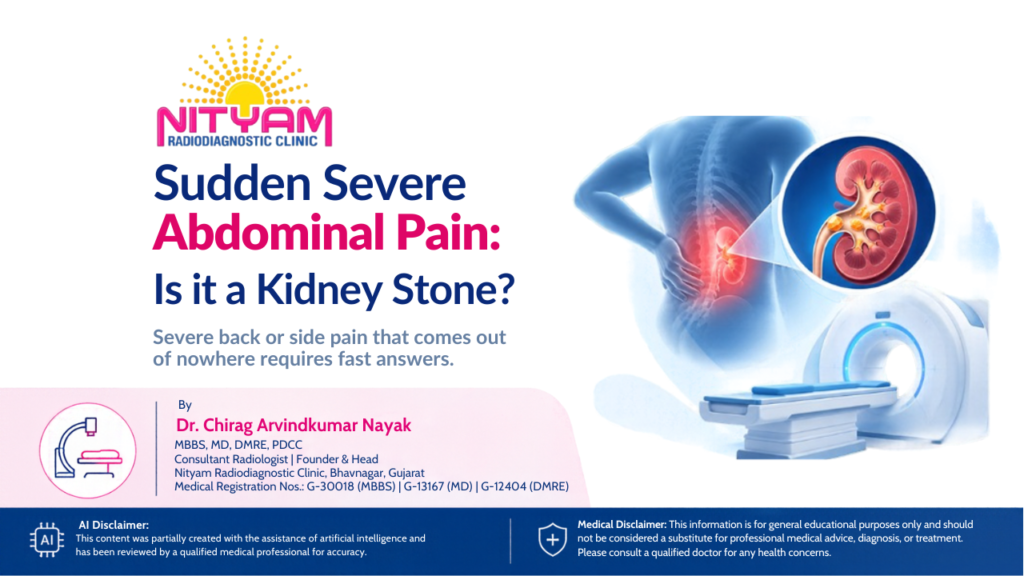
A kidney stone frequently causes sudden, severe abdominal pain. Typically, this intense pain begins in your back or your side. Next, it often radiates down toward your lower abdomen and groin. Medical professionals call this specific pain renal colic. Furthermore, you might experience nausea, vomiting, or notice blood in your urine. However, many other medical conditions also cause severe abdominal pain. Therefore, doctors use diagnostic imaging, like a painless ultrasound, to identify the exact cause correctly.
Introduction: When Abdominal Pain Strikes Suddenly
Sudden, severe abdominal pain often alarms patients. When sharp pain strikes without warning, it disrupts your daily life completely. Consequently, many people wonder if a kidney stone causes their sudden discomfort.
Kidney stones affect millions of people worldwide every year. They form when normal urine minerals crystallize and clump together. As these hard stones travel through your narrow urinary tract, they create significant physical blockages. This internal blockage triggers intense muscle spasms and severe pain.
Because abdominal pain has many possible sources, accurate diagnosis remains essential. This article explains the classic signs of a kidney stone. Additionally, it outlines how doctors use medical imaging to find the true cause of your symptoms safely.
Table of Contents
- What Exactly Are Kidney Stones?
- Classic Symptoms of a Kidney Stone
- Other Conditions That Cause Similar Pain
- How Do Doctors Diagnose Kidney Stones?
- When Should You Seek Immediate Medical Care?
- Frequently Asked Questions
What Exactly Are Kidney Stones?
Kidney stones are solid masses made of crystals. Your kidneys constantly filter waste materials from your blood. Sometimes, your urine contains too many crystal-forming substances. These substances include calcium, oxalate, and uric acid.
If your urine lacks enough fluid to dilute these minerals, the minerals stick together. Consequently, they form a hard stone. These stones range in size. Some remain as small as a grain of sand. Meanwhile, others grow as large as a golf ball. A very small stone might pass through your body unnoticed. However, larger stones inevitably block the flow of urine.
Classic Symptoms of a Kidney Stone
A kidney stone usually causes no symptoms until it moves inside your kidney. The pain begins when the stone passes into your ureter. The ureter is the tube connecting your kidney to your bladder.
1. Severe Flank Pain
First, you will likely feel a sharp, cramping pain in your back. This pain usually sits just below your ribs. Doctors call this area your flank. The pain often comes in distinct waves. It fluctuates in intensity as the stone moves.
2. Radiating Pain
Next, the pain typically spreads forward. It radiates down into your lower abdomen and your groin area. This shifting pain pattern serves as a strong indicator of a moving stone.
3. Urinary Changes
Furthermore, kidney stones often irritate your urinary tract. You might notice pink, red, or brown blood in your urine. Medical professionals call this condition hematuria. Additionally, you might feel a persistent, urgent need to urinate.
4. Nausea and Vomiting
Finally, the intense pain frequently triggers severe nausea. Many patients experience vomiting alongside their abdominal cramps. The nerves connecting your kidneys and your digestive tract often share similar pathways.
Other Conditions That Cause Similar Pain
You must remember that kidney stones do not cause all abdominal pain. Several other serious medical conditions present with very similar symptoms. Therefore, doctors must rule out these alternatives carefully.
- Appendicitis: An inflamed appendix causes sharp pain in your lower right abdomen. This pain usually worsens when you cough or walk.
- Gallstones: Gallstones cause severe pain in your upper right abdomen. This pain often strikes shortly after you eat a heavy, fatty meal.
- Ovarian Cysts: In women, a ruptured ovarian cyst creates sudden, sharp pelvic pain.
- Intestinal Infections: Severe stomach bugs cause cramping, nausea, and vomiting. However, they usually involve diarrhea as well.
How Do Doctors Diagnose Kidney Stones?
Because symptoms overlap, doctors rely on objective diagnostic tests. They use medical imaging to look directly inside your body safely.
The Role of Diagnostic Ultrasound
A diagnostic ultrasound serves as a primary tool for evaluating abdominal pain. During this painless test, a radiologist glides a small probe over your skin. The machine uses harmless sound waves to create live images of your kidneys and bladder.
An ultrasound quickly reveals kidney swelling. Swelling occurs when a stone blocks your urine flow. Furthermore, it easily detects most stones without exposing you to any ionizing radiation. Doctors highly prefer ultrasound imaging for pregnant women and young children because it remains completely safe.
Additional Testing
Sometimes, your doctor might order a CT scan to locate a very tiny stone. They will also request blood tests and urine tests. These laboratory tests check for urinary infections and measure your kidney function objectively.
When Should You Seek Immediate Medical Care?
You should never ignore sudden, severe abdominal pain. Certain warning signs indicate a medical emergency. You must seek urgent medical evaluation if you experience any of the following symptoms:
- Pain so severe that you cannot sit still or find a comfortable position.
- Pain accompanied by a high fever and uncontrollable chills.
- Pain accompanied by severe, unrelenting nausea and vomiting.
- Noticeable amounts of blood in your urine.
- Difficulty passing any urine at all.
A fever alongside a kidney stone indicates a dangerous urinary infection. This specific combination requires immediate medical intervention.
Frequently Asked Questions
- 1. How long does a kidney stone take to pass?
- The timeframe varies greatly. Small stones often pass on their own within a few days or weeks. However, larger stones might require medical procedures to break them apart or remove them completely.
- 2. Does drinking water help with kidney stones?
- Yes. Drinking plenty of water helps flush your urinary system. Doctors routinely advise patients to increase their fluid intake to help small stones pass naturally.
- 3. Is an ultrasound safe for detecting kidney stones?
- Yes. A diagnostic ultrasound uses harmless sound waves rather than radiation. It remains a completely safe, painless, and highly effective way to evaluate your kidneys.
- 4. Can diet cause kidney stones?
- Yes, your diet plays a significant role. Consuming too much salt, animal protein, and sugar increases your risk. Furthermore, failing to drink enough water remains the leading cause of stone formation.
Diagnostic Services Information
Nityam Radiodiagnostic Clinic provides diagnostic imaging and interventional radiology evaluations. The clinic performs these services under standardized clinical protocols upon medical referral. In accordance with ethical guidelines, clinical establishments may communicate objective and verifiable particulars concerning their establishment without patient solicitation or inducement.
This article provides general educational information about radiology. It never acts as a substitute for individual medical advice, clinical diagnosis, or prescribed treatment. Your doctor must evaluate your specific condition to determine if a minimally invasive procedure suits your medical needs. Always discuss the risks and benefits of any medical procedure directly with your healthcare provider.
In compliance with National Medical Commission guidelines, clinical establishments and Registered Medical Practitioners publishing electronic media posts must transparently disclose the practitioner’s name, qualifications, registration status, and State Medical Register (SMR) or National Medical Register (NMR) number. This educational material serves strictly for public health education and awareness. It provides objective, verifiable information without promoting personal practice, soliciting patients, or making unverifiable medical claims.
By Dr. Chirag Arvindkumar Nayak
Qualifications: MBBS, MD, DMRE, PDCC
Registration Status: Consultant Radiologist | Founder & Head
Medical Registration Nos.: G-30018 (MBBS) | G-13167 (MD) | G-12404 (DMRE)
Clinic: Nityam Radiodiagnostic Clinic, Bhavnagar, Gujarat
Nityam Radiodiagnostic Clinic
4 to 8, Ground Floor, Samved Complex,
Jail Road, Devbagh, Bhavnagar, Gujarat – 364001
Phone: +91 9427060235
Email: info@nityamradiologyclinic.com
Website: nityamradiologyclinic.com