
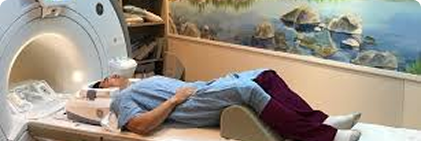
CT Scan
Computed Tomography (CT Scan) Services
Computed tomography (CT) services at Nityam Radiodiagnostic Clinic provide cross-sectional anatomical evaluations across cranial, thoracic, abdominal, and musculoskeletal regions. Clinical imaging and diagnostic reporting are conducted under the clinical direction of Dr. Chirag Arvindkumar Nayak (MBBS, MD, DMRE, PDCC) in accordance with AERB radiation safety protocols and standard diagnostic guidelines.
Clinical CT Modalities & Anatomical Coverage
Diagnostic cross-sectional examinations performed upon medical referral include:

Brain & Spine Imaging
Diagnostic cross-sectional evaluation for acute head trauma, stroke evaluation, persistent headaches, and degenerative spinal conditions.
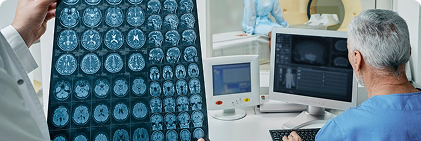
High-Resolution Computed Tomography (HRCT) Chest
High-resolution volumetric imaging for the evaluation of pulmonary parenchyma, diffuse lung diseases, chronic respiratory presentations, and thoracic infections.
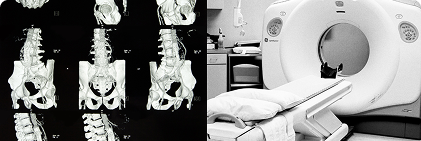
Abdomen & Pelvis CT
Multi-phase contrast-enhanced and non-contrast cross-sectional imaging for evaluation of hepatobiliary structures, pancreas, kidneys, bowel loops, and pelvic organs.
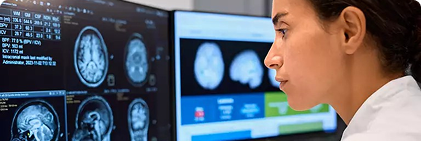
Head, Neck & Musculoskeletal CT
Cross-sectional skeletal and soft-tissue evaluation for bone fractures, articular pathologies, complex skeletal trauma, and neck masses.
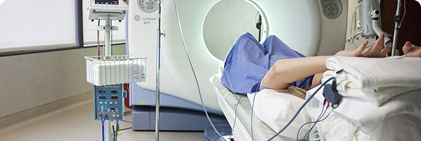
CT Angiography (CTA)
Contrast-enhanced vascular assessment to evaluate arterial and venous anatomy, luminal narrowing, vascular malformations, and aneurysms.
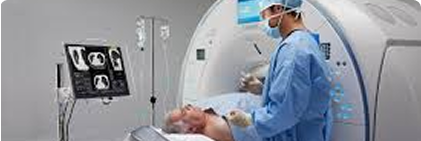
CT-Guided Interventions
Image-guided diagnostic access for biopsies, fine-needle aspiration cytology (FNAC), and targeted fluid aspirations performed upon clinical referral.
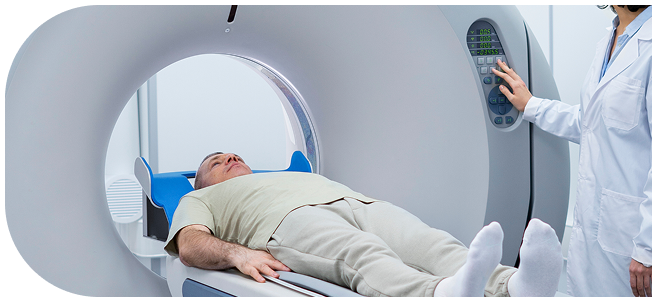
Clinical Reporting & Diagnostic Standards
Radiologist Evaluation:
All diagnostic scans are reviewed and reported directly by Dr. Chirag Arvindkumar Nayak (MBBS, MD, DMRE, PDCC).Volumetric Acquisition Protocols:
Imaging is conducted using multi-slice spiral CT systems optimized for rapid volumetric acquisition and anatomical detail.
Radiation Safety & ALARA Compliance:
Examinations follow AERB safety standards and As Low As Reasonably Achievable (ALARA) dose-optimization principles.
Structured Diagnostic Reporting:
Detailed, structured radiological reports and digital imaging records are generated for clinical correlation by treating physicians.
Diagnostic CT Scanning & Evaluation
Multi-slice cross-sectional imaging performed in accordance with AERB radiation safety guidelines and ALARA dose-optimization protocols.
FAQs
What is a CT scan and how does it work?
A CT scan uses rotating X-ray beams and computer processing to create detailed cross-sectional images (“slices”) of internal organs, bones, soft tissue, and blood vessels for diagnostic evaluation.
How should I prepare for my CT scan?
Routine non-contrast scans require no fasting. Contrast-enhanced scans (CECT) generally require 4 to 6 hours of fasting and a recent serum creatinine test. Remove all metallic items before the examination.
Is a CT scan safe? What about radiation?
CT scans use controlled, low-dose ionizing radiation under AERB guidelines and ALARA principles (“As Low As Reasonably Achievable”) to minimize exposure while providing necessary diagnostic detail. Inform staff beforehand if you are pregnant.
