
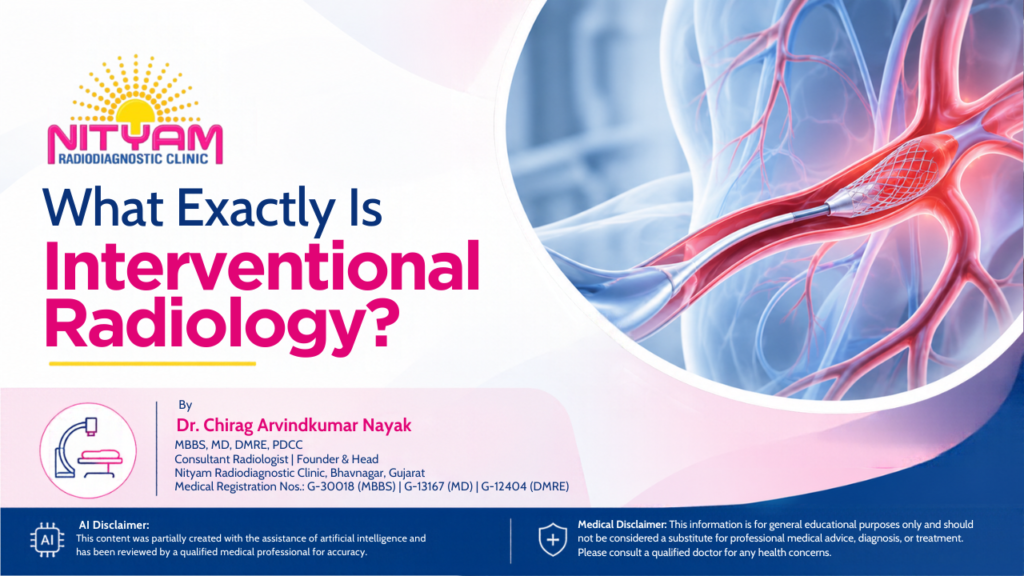
Quick Answer: Understanding Interventional Radiology
Interventional radiology (IR) is a specialized medical field. Doctors use medical imaging tools to see inside your body. Consequently, they use these real-time images to guide small tubes and instruments to the exact site of a problem. This technique allows them to treat many conditions without performing open surgery. Therefore, patients usually experience smaller incisions, less physical trauma, and shorter recovery times. Overall, interventional radiology provides a minimally invasive alternative to traditional surgical treatments.
Introduction: Beyond Standard X-Rays
Many patients feel confused when they hear the term “interventional radiology.” Traditionally, people believe radiologists only look at X-rays to diagnose diseases. However, modern medicine has evolved significantly. Today, specialized radiologists do much more than simply read scans.
Interventional radiologists actually treat medical conditions directly. They use advanced imaging machines to map your internal anatomy. Then, they guide tiny medical tools precisely where they need to go. This article explains how these procedures work, what conditions they treat, and what you can expect during a typical appointment.
Table of Contents
- How Does Interventional Radiology Work?
- Common Interventional Radiology Procedures
- What Are the Clinical Benefits?
- What to Expect During Your Procedure
- Frequently Asked Questions
How Does Interventional Radiology Work?
Interventional radiology combines diagnostic imaging with hands-on medical treatment. The process involves a few fundamental steps.
Using the Imaging Map
First, the doctor uses an imaging machine. This machine might be an ultrasound, a CT scanner, or a fluoroscope (live X-ray). The images appear on a monitor in real time. These live pictures act like a GPS map for the doctor.
Guiding the Instruments
Next, the doctor makes a tiny nick in your skin. They insert a thin, flexible tube called a catheter into a blood vessel. By watching the live monitor, the doctor navigates this catheter directly to the problem area. Consequently, they treat the issue at its exact source without cutting open surrounding healthy tissue.
Common Interventional Radiology Procedures
Doctors use interventional radiology to treat a wide variety of medical issues throughout the body.
- Angiography and Stenting: Doctors inject a contrast dye to find blockages in your blood vessels. Furthermore, they can place a small mesh tube (stent) to keep the vessel open.
- Needle Biopsies: Radiologists guide a small needle into a suspicious lump to take a tissue sample. This prevents the need for a surgical biopsy.
- Fluid Drainage: Sometimes, harmful fluid builds up in your lungs or abdomen. The doctor uses imaging to place a small tube and drain the fluid safely.
- Embolization: Doctors can intentionally block blood flow to a specific area. They often use this technique to stop internal bleeding or shrink benign tumors like uterine fibroids.
What Are the Clinical Benefits?
Medical professionals frequently recommend interventional radiology because it offers several distinct advantages over traditional open surgery.
- Minimally Invasive: The doctor only makes a tiny incision. Usually, this cut measures no larger than a grain of rice. Therefore, you do not need large stitches.
- Reduced Recovery Time: Because the procedure avoids major tissue cutting, your body heals much faster. Many patients return home the exact same day.
- Lower Risk of Complications: Smaller incisions naturally lower your risk of developing post-procedure infections.
- Local Anesthesia: Most IR procedures only require local numbing medicine and mild sedation. Consequently, you avoid the risks associated with general anesthesia.
What to Expect During Your Procedure
Knowing what happens during your visit helps reduce anxiety. While every procedure differs slightly, most follow a similar routine.
Before the Procedure
Your medical team will give you specific fasting instructions. You must tell your doctor about all your current daily medicines. Specifically, you need to mention if you take any blood thinners.
During the Procedure
The team will ask you to lie on an examination table. A nurse might give you medicine through an IV line to help you relax. Next, the doctor cleans and numbs your skin. You will feel slight pressure when they insert the catheter, but the numbing medicine prevents sharp pain.
After the Procedure
Following the treatment, the staff will move you to a recovery room. They monitor your vital signs and check your incision site for any bleeding. Finally, the doctor will explain your discharge instructions. You will need a family member to drive you home safely.
Frequently Asked Questions
- 1. Does interventional radiology use radiation?
- Yes, many procedures use X-rays or CT scans, which involve radiation. However, doctors use the lowest possible dose necessary to complete the treatment safely. Some procedures use ultrasound, which involves zero radiation.
- 2. Is interventional radiology considered surgery?
- Medical professionals classify it as a minimally invasive procedure, not traditional open surgery. You do not receive large incisions, and doctors rarely use general anesthesia.
- 3. Who performs these procedures?
- An interventional radiologist performs the procedure. This medical doctor completes advanced training in both radiology (reading images) and minimally invasive therapies.
- 4. Will I stay in the hospital overnight?
- Most interventional radiology procedures occur on an outpatient basis. You typically go home the same day. However, more complex treatments might require a short overnight stay for observation.
Diagnostic Services Information
Nityam Radiodiagnostic Clinic provides diagnostic imaging and interventional radiology evaluations. The clinic performs these services under standardized clinical protocols upon medical referral. In accordance with ethical guidelines, clinical establishments may communicate objective and verifiable particulars concerning their establishment without patient solicitation or inducement.
This article provides general educational information about interventional radiology. It never acts as a substitute for individual medical advice, clinical diagnosis, or prescribed treatment. Your doctor must evaluate your specific condition to determine if a minimally invasive procedure suits your medical needs. Always discuss the risks and benefits of any medical procedure directly with your healthcare provider.
In compliance with National Medical Commission guidelines, clinical establishments and Registered Medical Practitioners publishing electronic media posts must transparently disclose the practitioner’s name, qualifications, registration status, and State Medical Register (SMR) or National Medical Register (NMR) number[cite: 4]. This educational material serves strictly for public health education and awareness. It provides objective, verifiable information without promoting personal practice, soliciting patients, or making unverifiable medical claims[cite: 8, 9].
By Dr. Chirag Arvindkumar Nayak
Qualifications: MBBS, MD, DMRE, PDCC
Registration Status: Consultant Radiologist | Founder & Head
Medical Registration Nos.: G-30018 (MBBS) | G-13167 (MD) | G-12404 (DMRE)
Clinic: Nityam Radiodiagnostic Clinic, Bhavnagar, Gujarat
Nityam Radiodiagnostic Clinic
4 to 8, Ground Floor, Samved Complex,
Jail Road, Devbagh, Bhavnagar, Gujarat – 364001
Phone: +91 9427060235
Email: info@nityamradiologyclinic.com
Website: nityamradiologyclinic.com